


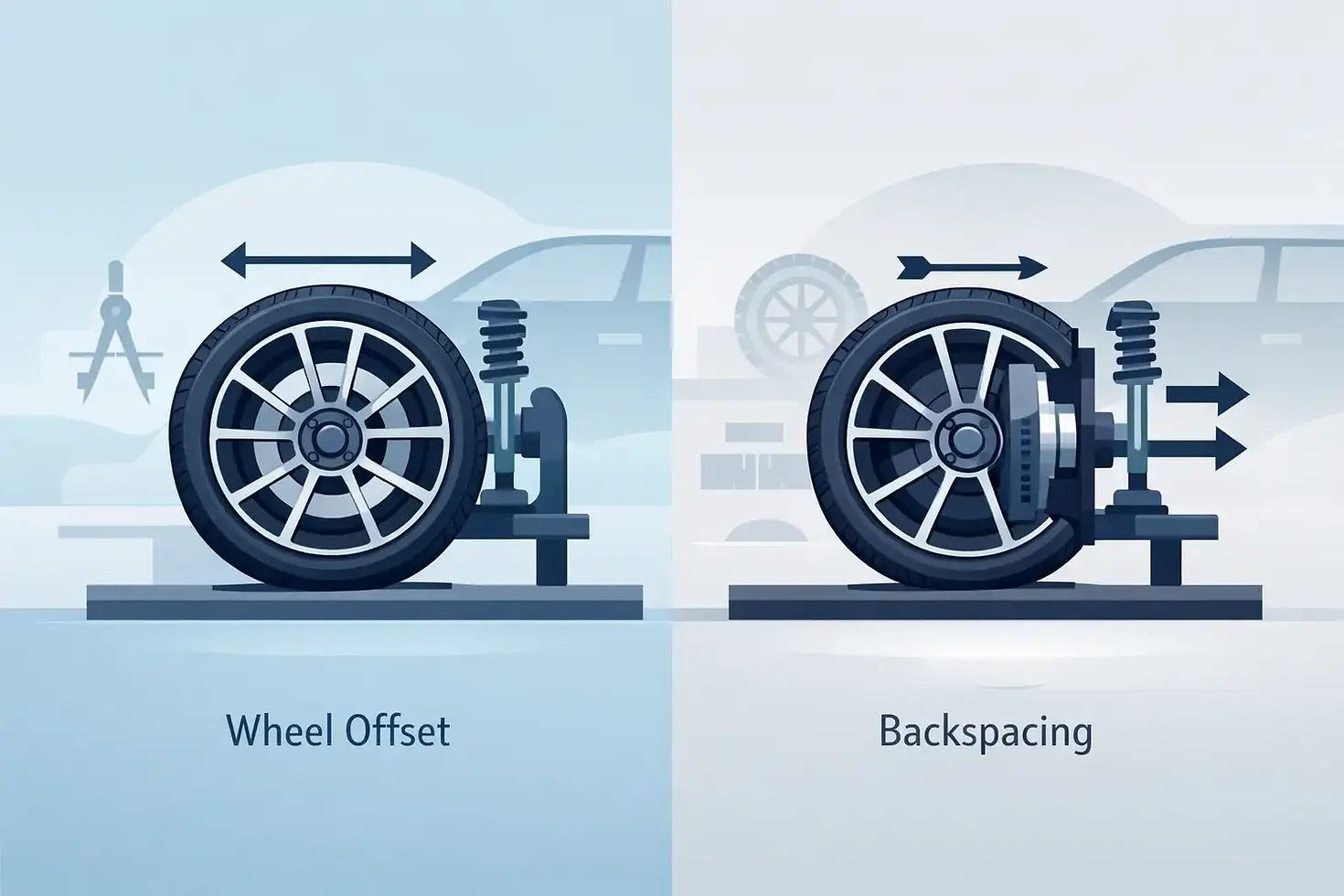
Wheel Offset Versus Backspacing Explained
A wheel can have the right diameter, bolt pattern, and great-looking finish, then still fit wrong because its mounting position is off. Wheel offset versus backspacing is the measurement comparison that determines where the wheel sits in the wheel well - closer to the suspension, farther toward the fender, or right where it belongs. For truck, SUV, and performance builds, getting this right protects clearance, handling, and the look you want.
Wheel Offset Versus Backspacing: The Quick Difference
Offset and backspacing both describe wheel position, but they use different reference points.
Wheel offset is measured from the wheel’s centerline to its mounting pad, usually in millimeters. The mounting pad is the flat surface that sits against the vehicle hub. A positive offset means that pad is positioned toward the wheel’s outer face, which pulls the wheel farther inward. A negative offset places the pad toward the inner side of the wheel, pushing the wheel outward for a wider stance.
Backspacing is measured from the wheel’s inner mounting surface to the inner edge of the wheel. It is usually listed in inches. More backspacing moves the wheel inward toward suspension components. Less backspacing moves it outward toward the fender.
They describe the same general fitment outcome from two different angles. Offset is especially common on passenger cars, crossovers, and modern factory wheel specifications. Backspacing is a familiar measurement for trucks, Jeeps, classic vehicles, and off-road wheel setups.
Why the Numbers Matter Before You Buy
A wheel’s position affects much more than appearance. Move it too far inward and the tire can contact a control arm, tie rod, shock, strut, brake hardware, or inner fender liner. Move it too far outward and the tire may rub the fender, flare, bumper edge, or liner when turning and compressing the suspension.
That extra outward position can create the aggressive stance many truck owners want, particularly with larger all-terrain or mud-terrain tires. But more poke is not automatically better. Pushing the wheel outward changes scrub radius and can increase steering effort, bump steer, and stress on wheel bearings and suspension parts. It may also put the tire beyond the fender coverage required where you drive.
The best fitment is not always the most aggressive one. It depends on your vehicle, wheel width, tire size, lift height, alignment, intended use, and how much trimming or modification you are willing to do.
Positive, Zero, and Negative Offset
Positive offset is common on many late-model cars, SUVs, and trucks. It tucks the wheel inward and often supports factory suspension geometry. If you replace an OEM wheel with one that has substantially more positive offset, inner clearance becomes the concern.
Zero offset means the mounting pad is essentially at the wheel centerline. On a wider aftermarket wheel, zero offset often creates a noticeably wider stance than the factory setup.
Negative offset pushes the wheel face outward. It is popular on lifted trucks and off-road builds because it can create clearance on the suspension side while delivering a bolder, wider look. The trade-off is reduced fender clearance and potentially greater load on steering and suspension components.
What Backspacing Tells Truck Owners
Backspacing gives a practical view of inner clearance. A lower backspacing number generally moves a wheel and tire outward, creating more room around the upper control arm, leaf spring, or shock. A higher number tucks the wheel inward.
For example, a 17x9 wheel with roughly 5 inches of backspacing sits very differently from a 17x9 wheel with 6 inches of backspacing, even though both wheels share the same diameter and width. That one inch can decide whether a larger tire clears at full steering lock.
How Offset and Backspacing Work Together
Wheel width is the missing piece in many fitment conversations. You cannot compare offset or backspacing accurately without knowing the wheel width.
A simple planning formula is:
Approximate backspacing = half of wheel width + offset converted to inches
Since 25.4 millimeters equals 1 inch, a 9-inch-wide wheel at zero offset has an approximate 4.5-inch backspacing. Add +12 mm of offset, or about 0.47 inch, and the approximate backspacing becomes 4.97 inches. The wheel moves inward by nearly half an inch. Change that same wheel to -12 mm offset and it moves outward by nearly half an inch.
Use this formula as a starting point, not a final measurement. Advertised wheel width is measured at the bead seats, while backspacing is often measured to the wheel lip. Lip thickness and wheel design can cause the real-world number to vary. Always confirm the manufacturer’s listed specifications when clearance is tight.
Fitment Changes That Cause Problems
A new wheel should be evaluated as part of a complete package, not as a standalone part. A wheel that clears with a stock-size tire may rub once you install a wider or taller tire. Likewise, a suspension lift may provide more vertical room but not solve rubbing at full turn.
Brake clearance is another major factor. Wheel diameter alone does not guarantee that the spokes and barrel will clear larger calipers. A 17-inch wheel may physically fit over one brake package while another 17-inch design contacts the caliper because of its spoke profile.
Pay close attention to these fitment variables:
Wheel diameter and width
Offset or backspacing
Tire width and overall diameter
Bolt pattern and center bore
Brake caliper clearance
Suspension height and alignment settings
Fender, liner, bumper, and mud-flap clearance at full lock
A wheel can clear while parked and still rub on the road. Test clearance with the steering turned fully both directions and with the suspension compressed as it would be over a driveway dip, trail obstacle, or loaded haul.
Factory Replacement Fitment vs. Custom Stance
For a daily driver that needs dependable replacement wheels, staying close to factory offset is usually the safest move. It preserves predictable steering feel, supports proper clearance, and helps the tire sit where the manufacturer designed it to sit. This is especially relevant for vehicles equipped with advanced driver-assistance systems, sensitive suspension geometry, or tight wheel wells.
For a custom truck or SUV build, there is more room to tailor the stance. A wider wheel with less backspacing or more negative offset can clear suspension parts and fill out the fenders. The key is choosing a combination based on actual measurements, not an assumption that every lifted vehicle accepts the same wheel spec.
Off-road use adds another layer. More outward wheel position may improve clearance around some suspension components, but it also exposes the tire sidewall and wheel lip farther beyond the body. Trail use, tire pressure, articulation, and steering angle all reveal clearance issues that may not appear during a quick street test.
Should You Use Wheel Spacers?
Wheel spacers reduce effective positive offset and move the wheel outward. They can be useful when a wheel has adequate fender room but sits too close to a brake caliper or suspension component. Still, a spacer is not a substitute for selecting the right wheel in the first place.
If spacers are part of the plan, use vehicle-specific, quality components with the correct hub fitment and hardware. Confirm that stud engagement is sufficient, follow the vehicle’s torque specifications, and recheck torque after the initial drive period. Avoid stacking spacers or using them to force a wheel and tire package that clearly does not belong on the vehicle.
A Smarter Way to Choose Your Next Wheels
Start with your exact year, make, model, trim, drivetrain, and brake package. Then decide what the wheel needs to do. Are you replacing a factory wheel for reliable daily use, building a clean street stance, running wider performance tires, or preparing a truck for trails and larger tires? That answer shapes the right width, offset, and backspacing range.
If you are changing tire size, compare both inner and outer clearance against your current setup. The inner side is controlled largely by backspacing and positive offset. The outer side is affected by wheel width, negative offset, tire width, and fender space. Small changes add up quickly when several specs change at once.
Empire Tire Wheel helps drivers match tires and wheels to the vehicle and the job ahead, whether that means a confident factory-style replacement or a tougher off-road upgrade. Bring the exact vehicle details and the tire size you want to run, and fitment decisions become far more precise.
The right wheel should look ready for the road or trail while leaving room for every turn, bump, load, and mile ahead.


Comments